

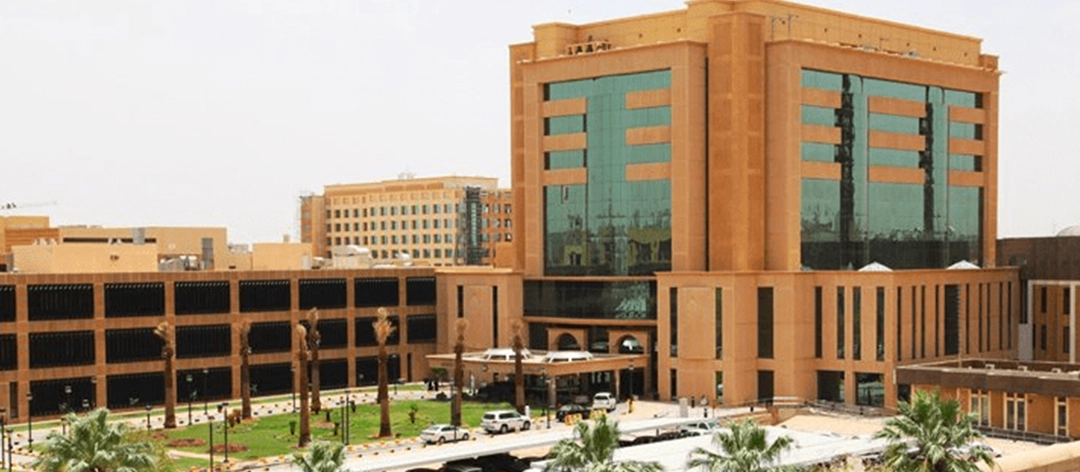
King Faisal Specialist Hospital and Research Centre (KFSH&RC) is a government academic medical centre.
It is ranked 12th globally among the world's top 250 academic medical centres (Brand Finance 2026) and has held the No. 1 position in Saudi Arabia for 5 consecutive years (Newsweek).
It treats international patients because GCC governments refer their citizens there for procedures unavailable at home.
The outcomes data reflects that. 5,000+ kidney transplants since 1981. A 97-99% one-year survival rate for kidney, liver, and heart transplants. 47% growth in international patient admissions in 2024.
My 1Health is a global medical tourism company, partnered with King Faisal Specialist Hospital to help you access treatment there at no additional cost.
We submit your reports to the hospital's specialist team, coordinate your treatment plan and cost estimate, and manage your visa, travel, and 24/7 support.
We take care of everything, so you can focus on getting better
Trusted by Millions Seeking World-Class Treatment
 Instant visa letter
 Flight bookings
 Airport pickup
 Accommodation
 24/7 support
This guide covers KFSH&RC's strongest specialties, 2026 cost comparisons, the step-by-step patient journey, the Saudi medical visa process, and what Muslim patients need to know.
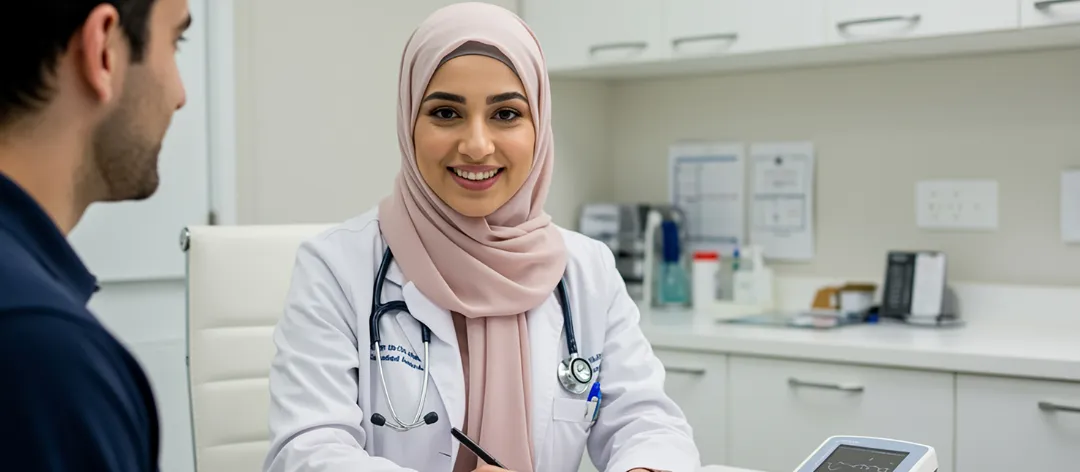
King Faisal Specialist Hospital: International Patient Services
KFSH&RC is a government academic medical centre that accepts international patients for complex, specialist treatment.
The experience around it, the administration, the waiting room, and the pace of a government institution are functional.
The hospital is the right choice if you need:
- Lung transplantation (only programme in Saudi Arabia, the GCC, and the Arab world)
- Heart transplantation (only programme in the Gulf, active since 1989)
- Bone marrow transplant with unrelated donor access (accredited by EBMT, CIBMTR, NMDP, and Children's Oncology Group simultaneously)
- Robotic cardiac surgery (highest volume outside the USA, 98% survival rate)
- In-house CAR T cell therapy (only Arab world centre manufacturing this locally)
- Sickle cell disease or thalassaemia requiring curative transplant (prevalent in Bahrain, Kuwait, Oman, UAE; nearest credentialled centre with unrelated donor access)
- Epilepsy surgery using SEEG (top 10 globally; 200+ procedures; largest epilepsy monitoring unit in the Middle East)
- Deep brain stimulation for Parkinson's disease or movement disorders (largest DBS programme in the Middle East; doubled in volume 2021-2024)
- Paediatric cancer treatment (King Fahad National Centre for Children's Cancer; 92% 5-year survival for childhood leukaemia; comparable in annual volume to St. Jude in the USA)
- Complex orthopaedic surgery including bone tumour reconstruction (No. 1 Middle East, Newsweek 2026; internationally accredited Bone Bank)
- A second opinion on a complex or rare diagnosis before committing to treatment elsewhere
It is worth knowing before you enquire:
- This is a high volume referral centre for complex cases. If your condition is non-urgent and strong private alternatives exist closer to home, KFSH&RC is not always the most practical choice
- The patient environment is that of a large government hospital with state-of-the-art treatments and technology, not designed to feel like a private medical stay

KFSH&RC Specialties: What It Treats and What the Data Shows
Independently verified clinical data support KFSH&RC's programmes listed below. These are where it stands apart globally.
1. Organ Transplantation
King Faisal is Gulf's only heart transplant centre since 1989. The Arab world's only lung transplant programme since 1998.
- Heart transplants performed: 413
- Lung transplants since 2000: 268+
- Kidney transplants since 1981: 5,000+
- One-year survival rates: 97-99% for kidney, liver, and heart (published; above the 92-96% range reported for high-volume centres in the American Journal of Transplantation)
- World's largest Kidney Paired Donation Programme: 500+ paired transplants since 2011
Kidney Paired Donation (KPD) matches patients whose blood type is incompatible with their living donor to compatible pairs elsewhere, removing one of the most common barriers to transplant for GCC families.
Speak with a KFSH&RC Transplant Specialist
2. Stem Cell Transplant and Blood Disorders
The KFSH&RC haematology and stem cell transplant programme holds simultaneous accreditation from EBMT, CIBMTR, NMDP, and the Children's Oncology Group.
- 7,649+ stem cell transplants since 1984
- 140+ paediatric transplants annually
CAR T (Chimeric Antigen Receptor T cell) therapy re-engineers your own immune cells to identify and destroy cancer cells.
It is used for relapsed blood cancers including acute lymphoblastic leukaemia and diffuse large B cell lymphoma.
- CAR T therapy manufactured in-house (only Arab world centre doing this): 200+ patients treated since 2020
- Preparation time cut by 50%; costs reduced by 80% versus importing from international manufacturers
Sickle cell disease and thalassaemia, both prevalent among newborns in Bahrain, Kuwait, Oman, and the UAE, often require curative transplant.
KFSH&RC is the nearest credentialled centre offering unrelated donor access for these cases.
Consult with the KFSH&RC Blood Disorder Team
3. Cardiac Surgery and Robotic Procedures
The KFSH&RC robotic surgery programme holds the highest robotic cardiac volume outside the United States.
- 400 robotic cardiac surgeries with a 98% survival rate
- Top 5 globally for complex robotic multi-valve procedures (American Global Medical Surgical Robotics)
- World's first fully robotic heart transplant: September 2024 (patient discharged in 8 days)
- World's first robotic HeartMate 3 artificial heart pump implantation: January 2025
- Prof. Zohair Alhalees: 25,000+ cardiac surgeries, 2026 American College of Cardiology Lifetime Achievement Award
Speak with a KFSH&RC Heart Specialist
4. Neuroscience, Oncology, and Orthopaedics
SEEG (Stereoelectroencephalography) is a depth electrode technique used to precisely locate the brain region causing drug-resistant epilepsy before surgery.
KFSH&RC's epilepsy surgery programme ranks top 10 globally for SEEG, with 200+ procedures performed.
The hospital houses the largest deep brain stimulation (DBS) programme in the Middle East, with cases doubling between 2021 and 2024.
In oncology, KFSH&RC treats approximately 25% of all cancer cases in Saudi Arabia and holds WHO accreditation as a Collaborating Centre for Cancer Prevention and Control.
5-year survival rate: 92% for childhood leukaemia (ALL), 97% for paediatric renal tumours.
The King Fahad National Centre for Children's Cancer accepts 400+ new paediatric cases annually.
The KFSH&RC orthopaedics programme is ranked No. 1 in the Middle East (Newsweek 2026), performing 1,300+ surgeries annually with Saudi Arabia's first orthopaedic Regenerative Medicine Centre.
Connect with the KFSH&RC International Patient Team

How Much Does Treatment at KFSH&RC Cost? (2026 Comparison)
Treatment at KFSH&RC costs significantly less than in the UK, US, or Germany for the same procedures.
Where KFSH&RC is the only option, heart transplant, lung transplant, and in-house CAR T therapy, the comparison is against Western pricing.
All figures below are 2026 estimates covering the procedure and standard hospital stay.
They exclude flights, family accommodation, extended recovery stays, and postoperative medications. For transplant cases, these additional costs are significant: recovery runs 4 -10 weeks depending on the organ.
| Procedure | KFSH&RC Saudi Arabia | India | Turkey | Germany | UK (Private) |
|---|---|---|---|---|---|
| Stem cell/bone marrow transplant | USD 30,000-60,000 | USD 20,000-40,000 | USD 40,000-70,000 | USD 80,000-150,000 | USD 120,000-200,000 |
| Cardiac surgery (valve replacement/CABG) | USD 15,000-35,000 | USD 8,000-20,000 | USD 12,000-25,000 | USD 30,000-60,000 | USD 40,000-80,000 |
| Cancer treatment (chemo + targeted, per cycle) | USD 3,000-12,000 | USD 2,000-8,000 | USD 3,500-10,000 | USD 8,000-20,000 | USD 10,000-25,000 |
2026 estimates. Costs vary by patient complexity and length of stay. Contact My 1Health for a written cost estimate specific to your diagnosis.
You can read more in our guide to the world's leading bone marrow transplant hospitals.
For heart transplant, lung transplant, and in-house CAR T therapy, KFSH&RC is the only option in the Arab world.
The relevant comparison there is Saudi Arabia against Germany or the USA. On that basis, Saudi Arabia is substantially more affordable.
For GCC patients funded through their government, Kuwait, Bahrain, Qatar, Oman, UAE nationals referred through their national health authority, KFSH&RC is often on the approved list.
Get a written treatment cost estimate specific to your diagnosis
How International Patients Access Treatment at KFSH&RC
KFSH&RC accepts international patients through a formal case review process. You cannot self-refer online. Here is how it works.
1. Submit your medical reports
Your diagnosis, imaging, blood results, biopsy, and referring doctor's summary go to the hospital's specialist multidisciplinary team (MDT) for your condition.
They review your case and confirm whether you meet the criteria for admission.
When you work with My 1Health, our team prepares and submits your reports on your behalf. We make sure everything is in order the first time.

2. Receive your assessment and cost estimate
Once the MDT reviews your case, you receive a written clinical assessment and cost estimate covering the procedure, hospital stay, and duration.
Nothing is paid until you have a clear picture of what treatment involves and what it costs.
3. Visa and travel preparation
The hospital issues a Medical Referral Letter once your case is accepted.
Our team handles visa documentation, accommodation near the campus, airport transfer, and a written treatment itinerary.
4. Treatment
You arrive with your care plan confirmed. One international patient coordinator stays with your case from first contact through your entire stay.
One consistent point of contact makes a significant practical difference during a long inpatient admission.
5. Follow up at home
After discharge, your care continues remotely through the AlTakhassusi App, giving you direct access to your specialist team, operative reports, and imaging.
For GCC patients returning home, local subspecialty follow-up for complex cardiac or transplant cases is not always available locally.
Our team coordinates the handover with a physician in your home country wherever possible.
Saudi Arabia Medical Visa: What You Need for KFSH&RC Treatment
GCC nationals (Kuwait, Bahrain, Qatar, Oman, UAE) can enter Saudi Arabia without a visa or with simplified entry. Confirm your specific requirements with your country's travel authority.
Non-GCC patients (Egypt, Jordan, Lebanon, India, Canada, USA, and others) need a Saudi medical visa. Applying is straightforward once your case is accepted.
a) Saudi medical visa document checklist:
- Valid passport with at least 6 months' validity from your travel date
- Medical Referral Letter from KFSH&RC (issued after your case is accepted)
- Appointment confirmation from the hospital
- Recent medical reports and diagnosis documentation
- Travel insurance documentation
- Completed visa application via Saudi Arabia's Enjaz portal or nearest Saudi embassy
b) Processing time:
3 to 10 working days from a complete application. Start as soon as treatment dates are confirmed. Book flexible or refundable flights until visa approval is confirmed.
c) What My 1Health handles:
Our team submits a formal patient coordination request alongside your hospital documentation and prepares your full documentation package before submission.
For accompanying family members, a companion visa can be applied for simultaneously. One companion is usually permitted under the same referral letter
Submit your diagnosis to begin the eligibility review
Is KFSH&RC Suitable for Muslim Patients? Halal, Prayer and Umrah
For patients and families from Kuwait, Bahrain, Qatar, Oman, the UAE, Egypt, Jordan, and across the Muslim world, Saudi Arabia offers the ability to be close to what matters most, spiritually, while receiving treatment.
a) Halal food and prayer across all campuses
Every meal served at KFSH&RC is halal. Prayer rooms are available on all campuses in Riyadh, Jeddah, and Madinah.
For patients observing Ramadan, the hospital adjusts medication timings, treatment schedules, and meal plans accordingly.

b) The Madinah campus: treatment minutes from Masjid an Nabawi
The Madinah campus sits minutes from the Prophet's Mosque.
Patients receiving outpatient consultations, follow-up appointments, or shorter procedures there can combine their medical visit with time for prayer and pilgrimage.
For many GCC families, this is a meaningful factor when choosing Saudi Arabia over Turkey or Germany for procedures where both would otherwise be comparable.
c) The Jeddah campus: 80 kilometres from Makkah
Patients treated at the Jeddah campus who have been cleared to travel by their care team can reach Makkah in roughly an hour.
Umrah is feasible for those who have completed treatment and received medical clearance.
It is important to confirm this with your physician before making any plans.
Some patients recovering from major surgery or transplantation will be advised to wait, and that guidance exists to protect the recovery.
For non-Muslim patients
Saudi Arabia is a conservative country, and the hospital reflects the society it sits in. Modest dress is expected in public spaces, meaning shoulders and knees covered.
The hospital itself is professionally multicultural, with staff from 63 nationalities, and the clinical environment is international in its standards.
Alcohol is not available in the Kingdom.
| Campus | Proximity to holy site |
|---|---|
| Madinah | Minutes from Masjid an Nabawi (Prophet's Mosque) |
| Jeddah | 80 km from Makkah |
| Riyadh | Saudi Arabia's capital; full international patient services |